
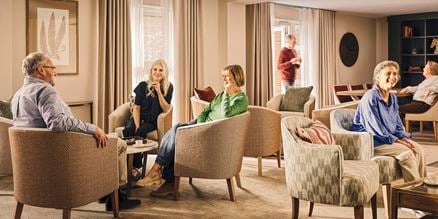




People often use the terms assisted living and care home interchangeably. It’s easy to see why. Both offer support in later life, and both can help people continue living safely as their needs change.
The difference is that they’re designed for different stages of later life.
Someone who still enjoys living independently but would appreciate a little extra help is likely to have very different needs from someone who can no longer manage everyday life without ongoing care. Understanding that distinction makes choosing between the two much easier.
In this guide, we’ll compare assisted living and residential care homes side by side, looking at independence, accommodation, care, costs and who each option is best suited to.
If you’re still exploring your options, you can also learn more about Retirement Living Plus, McCarthy & Stone’s assisted living offering, before deciding which type of support feels right for you.
What is assisted living?
Assisted living is designed for people who still want to live independently but would benefit from some extra support.
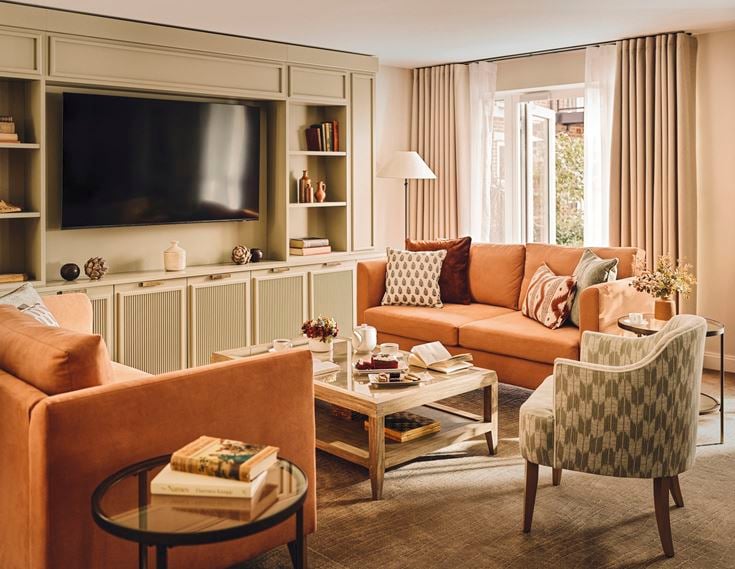
Rather than moving into a care setting, you have your own self-contained home, usually an apartment or bungalow, where you come and go as you please, keep your own routine and enjoy the privacy of your own front door.
Most people move into assisted living because they don’t need constant care; they simply don’t want to manage everything on their own anymore. That might mean help with personal care, household chores, medication or everyday tasks that have become a little more difficult. Some people use support services regularly, while others only need occasional assistance.
Support can increase over time if it’s needed. Someone who only wants help with housekeeping today might choose personal care later on, without giving up the independence of having their own home.
At McCarthy & Stone, this is known as Retirement Living Plus. Residents live in their own private apartment within a community of like-minded people, with tailored care and lifestyle support available on site. It’s designed for people who want to maintain their independence while knowing help is close by if they need it.

What is a care home?
A residential care home is designed for people who need more day-to-day support than they can comfortably manage on their own.
Instead of living in a self-contained apartment, residents usually have their own bedroom within a shared home. Meals, personal care and daily routines are supported by care staff, with help available throughout the day and night.
Care homes are often the right choice when someone finds everyday tasks increasingly difficult without regular assistance. This may include help with washing, dressing, moving around safely, taking medication or eating and drinking.
Many care homes also organise activities and provide communal spaces where residents can spend time together, helping to create a supportive environment alongside the care they receive.
Although both care homes and assisted living provide support, they’re built around different lifestyles. Assisted living prioritises independent living with care available as needed. In contrast, residential care homes provide a higher level of everyday support for people who are no longer able to live independently. Care staff are available throughout the day and night, providing ongoing support with everyday living.
Care homes vs assisted living: Key differences
Assisted living and residential care homes both support people in later life, but they offer very different ways of living with varying levels of independence.
Assisted living is designed for people who still want their own home and can manage much of their everyday life themselves, with support available when needed. Residential care homes are intended for people who need regular, ongoing assistance throughout the day.
The comparison below highlights the main differences.
Assisted living | Residential care home | |
|---|---|---|
Independence | Residents live independently, with support available when needed. | Residents receive regular day-to-day care and support. |
Accommodation | Your own private apartment or bungalow. | Usually a private bedroom within a shared home. |
Personal care | Flexible, tailored around individual needs. | Regular personal care is part of everyday life. |
Medical support | Suitable for people who don’t require round-the-clock nursing care. | Suitable for people who need ongoing support. Nursing care may require a nursing home rather than a residential care home. |
Medical support | Suitable for people who don’t require round-the-clock nursing care. | Suitable for people who need ongoing support. Nursing care may require a nursing home rather than a residential care home. |
Social opportunities | Shared lounges, restaurants, activities and communal spaces, while keeping your own home. | Activities and communal living form part of daily life within the home. |
Costs and funding | Typically self-funded, with costs varying depending on accommodation and services used. | Costs vary according to care needs and may be partly funded by the local authority following assessment. |
Who it’s best suited to | People who remain largely independent but would benefit from some additional support. | People who can no longer live safely or comfortably without regular care. |
Neither option is inherently better than the other. They’re designed for different stages of later life, and the right choice depends on the level of support someone needs today rather than what they might need in years to come.
How does the cost of care compare to assisted living?
Cost often plays a significant part in the decision, but it’s rarely as straightforward as comparing two price tags.
Residential care home fees generally include accommodation, meals and the care provided by staff. The amount you pay depends on the level of support required, the care home's location, and whether any financial support is available through your local authority.
Assisted living is usually structured differently. You’re paying for your home, along with any care and lifestyle support you choose to use. Because support is flexible, living costs can vary from one resident to another depending on individual needs.
For many people, the question isn’t simply which option costs less. It’s which one offers the right level of support for their circumstances.
If you’d like to understand how retirement living compares financially with residential care, our guide to care home costs and retirement living options explains the different costs in more detail.
How to decide which care option is right for your needs
The right choice usually becomes clearer when you think about how everyday life looks today, rather than focusing on labels like “assisted living” or “care home”.
The answer often becomes clearer when you picture everyday life. One option is to have your own home with support close by. The other is designed around regular care throughout the day.
Questions worth asking include:
- How much support is needed each day? The answer will be very different for someone who occasionally needs a helping hand than for someone who depends on daily personal care.
- How important is living independently? If having your own home, your own routine and your own front door matters to you, assisted living is often the closer fit.
- Could care needs change? Some people prefer a flexible option that allows support to increase gradually over time.
- How will costs be funded? Understanding how each option is paid for can help narrow the decision.
- What sort of lifestyle feels right? Some people enjoy having their own front door and choosing when to socialise, while others benefit from the structure and routine of residential care.
There isn’t a single point at which everyone should move into assisted living or a care home. The best choice is the one that matches the person’s current needs while allowing them to live as comfortably and independently as possible.
Stay independent for longer with Retirement Living Plus
If, after comparing the two options, assisted living feels like the better fit for your circumstances, Retirement Living Plus is one way to enjoy independent living with support nearby.
Every resident has their own apartment or bungalow, with care available as and when it’s needed. Some arrange regular support, while others simply like knowing it’s there should life change unexpectedly.
Ask two residents what they enjoy most, and you’ll probably get two different answers. For one, it’s having neighbours nearby. For another, it’s popping into the shared lounge for coffee or simply closing their own front door at the end of the day.
If you’d like to see whether Retirement Living Plus could be the right fit for you or someone close to you, arrange a visit to one of our communities or speak to one of our friendly advisors by calling us on 0800 201 4811. They’ll be happy to answer your questions and explain what day-to-day life in assisted living is really like.
Assisted living vs care home FAQs
Who pays for assisted living?
Assisted living is usually self-funded. Residents typically pay for their accommodation and any care or support services they choose to use. Costs vary depending on the provider, the property and the level of support required.
What’s the difference between assisted and independent living?
Independent living is designed for people who want the benefits of living in a retirement community but don’t currently need regular care or personal support.
Assisted living offers the same independence of having your own home, with the added option to access care and lifestyle services if and when needed. If you’d like to learn more, our guide to Retirement Living explains how it differs from Retirement Living Plus.
Can you move from assisted living into residential care?
Yes. Assisted living can be a natural step between living completely independently and moving into residential care.
Many people spend years living happily in assisted living, increasing their support only as their needs change. If circumstances reach the point where ongoing residential care becomes more appropriate, moving into a care home remains an option.
For some people, renting an assisted living apartment also offers additional flexibility, allowing them to decide what works best as their circumstances evolve.
